
I naturally want to skip steps. That doesn’t mean that I don’t want to take them all, I just want to take them disorderly. What bad engineering, having to step on each step in sequence in order to progress. I would prefer my staircase to connect all steps to each other at any given point so I could move around with no constraints, tyvm.
In the process of finding an artistic voice, I wanted to skip, or rather condense, the part where you develop and morph your style through practice, time and patience and get to the part where you’ve already experimented plenty. So I did just that, with one exercise that revealed itself faulty but insightful.
Rabbid Holes explores saying yes to all the ideas that show up, no matter the extent of their silliness; consider sticking around for weekly-ish roundups
ground 0
The focus on one’s style and place in the artistic landscape, especially if linked to a career goal, is prone to blog searching, course buying, social media comparing, think-piece thinking. Especially in the beginning when you’re pulled in different directions and don’t know which fig to choose, so you Venn diagram your interests against each other in a profitability contest.
I was curious to explore different styles and whether integrating them with my own would give me more understanding of my current practice, and what flavour of artiste I might want to become. So I set up an exercise to try all styles at once: I would take one subject doing something interesting and redraw it in as many styles as I could. Seeing that a static image would be less than riveting for my novelty-hungry brain, I looked for a dancing scene, so all the frames would build into an animated result I could look forward to.
good reference, bad reference
I dug just a dachshund amount for the right reference, having already learned the perils of the never ending quest for the perfect, most suitable, cool reference. With its circular fun motions, one character, minimal background, and framing variations, I landed on Napoleon Dynamite’s dance scene. I didn’t know it at this point, but there also lie perils in not digging enough for a high-res reference. On the spectrum of how best to do this exercise, the painless option would’ve been to use something in my surroundings or film myself in good light. On the opposite side and increasing the pain level, was to sequence all 7518 frames of a 1080p dance scene, then hand pick 235 of the darkest, most pixelated frames as reference. Guess where I landed.
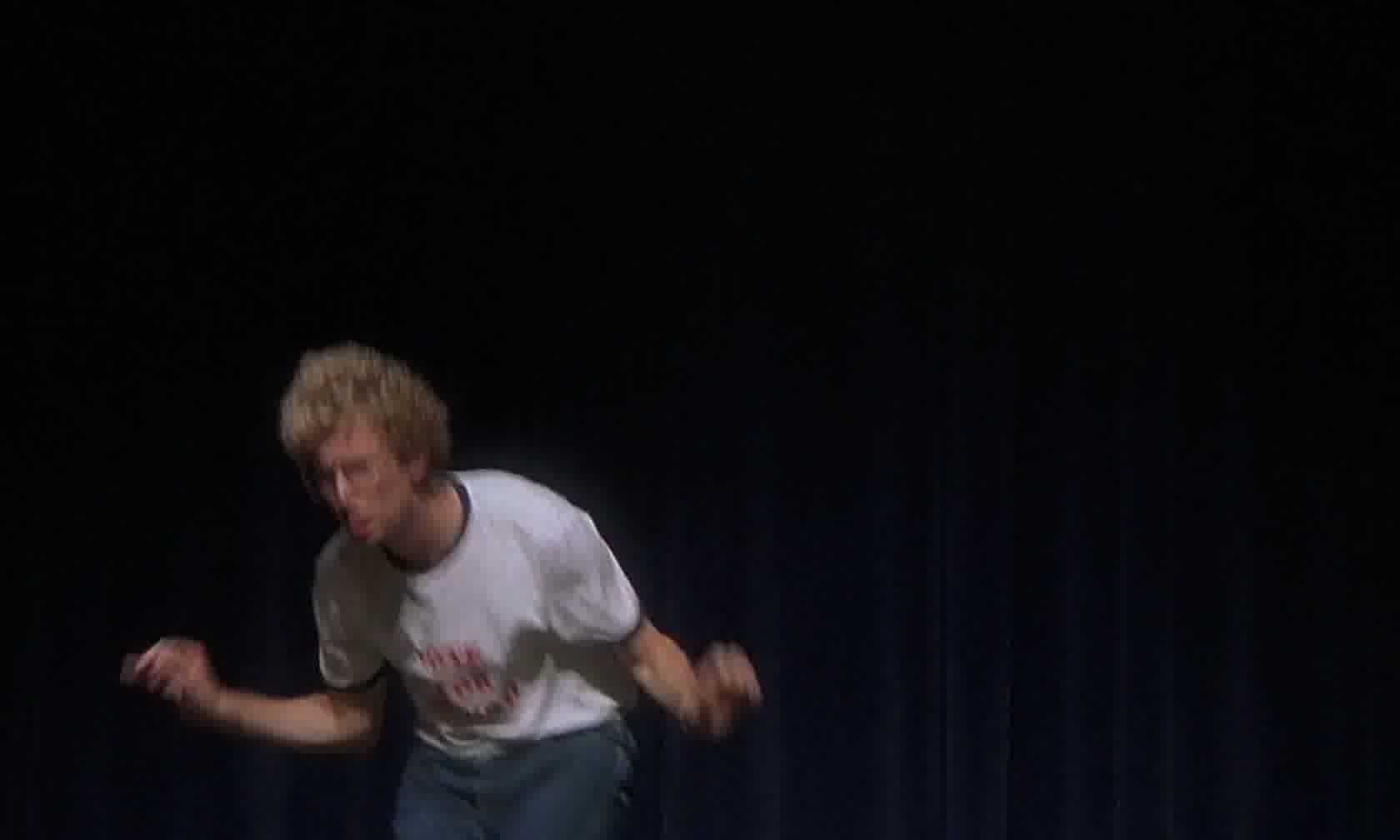
structural integrity
My goal was to vary greatly in style between frames and use mediums I don’t usually gravitate towards. But if I wanted the end result as animation, one frame had to inform the next for cohesion.
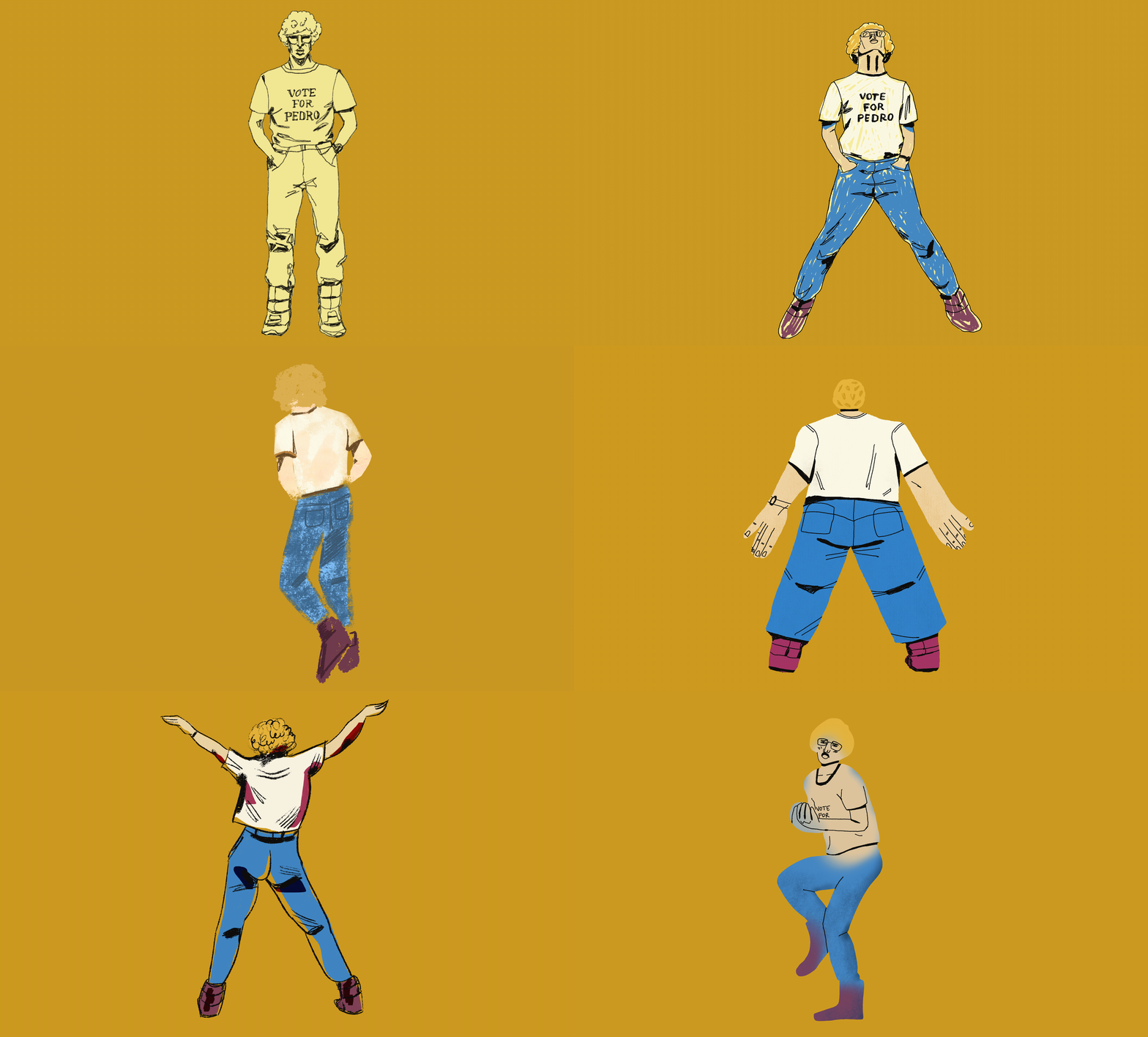
That meant I became more and more conscious of the bigger picture rather than experimenting freely. I started to pre-plan sizing, color or medium rather than exploring. After the digital attempts, I moved to paper, working only in monochrome with ink and graphite.
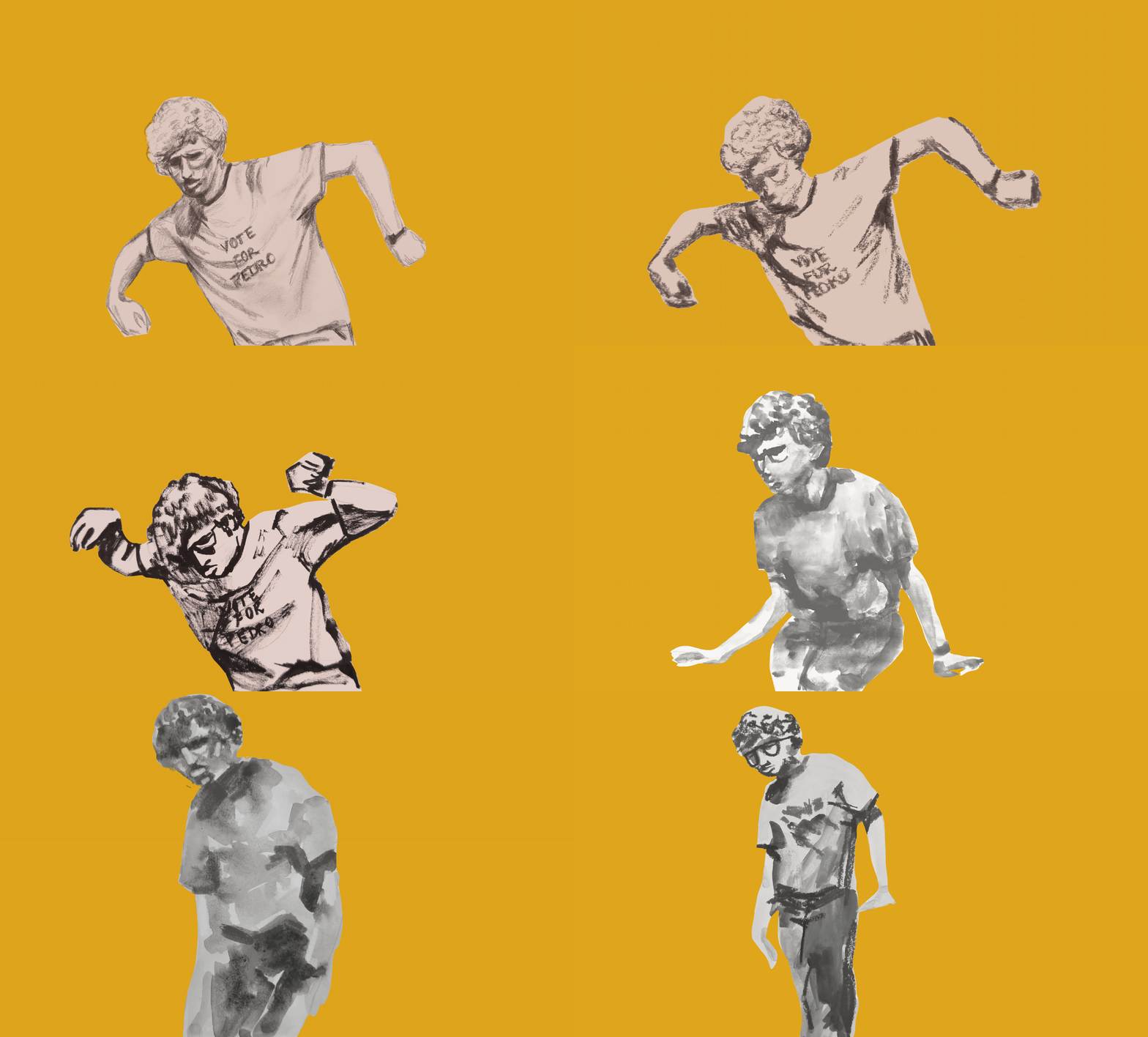
If I wanted to explore style with no regard for form, line, or perspective, adding in animation’s T&C muddied the waters of what I felt I could experiment with. I was back on a structured staircase, unable to jump around between steps.
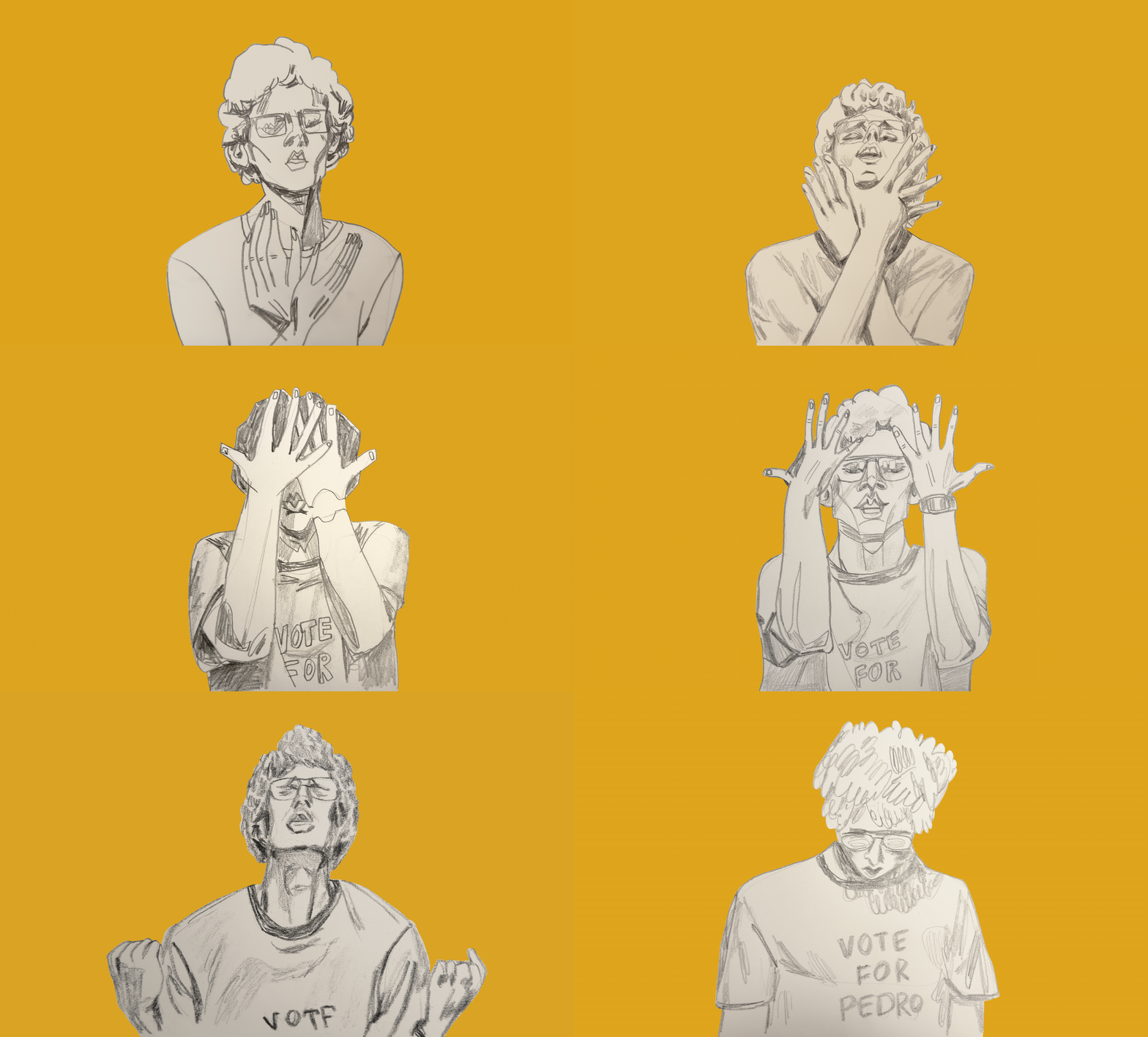
IT came
In an attempt to salvage the exercise, I looked at other artists and their expression of style. What worked for them, how could I integrate their choices with mine, what distinguished a successful style or practice? But surprise: if you plow through this comparative process all at once, without rest or relaxation, IT will probably come. And if you spend hours stuck in the scroll, IT will definitely come. IT is overwhelm. IT entices you to keep spinning the wheel, hoping you’ll land on something, but you’re actually stuck in place, going in circles.
At this point, the best thing I could do was pivot. Like a law firm executive who quits everything to follow their one true passion as a clarinetist, I had to stop spending time on something that wasn’t serving its purpose. Which, for someone who doesn’t know how to rest without completing an unreasonable task in an unreasonable timeframe, is its own important feat. The scroll wasn’t all useless though, as I came to some observations about style. Let me tell you the story of Philip’s red balls.
the apple theory
To tell Philip’s story, I’ll use the framing of the apple theory. According to the apple theory, one’s individual perspective is necessarily partial, depending on their position around the apple. You might see the apple as entirely red and argue with someone who sees it as entirely green, yet both can be true at once, because each view is limited and not all-encompassing.
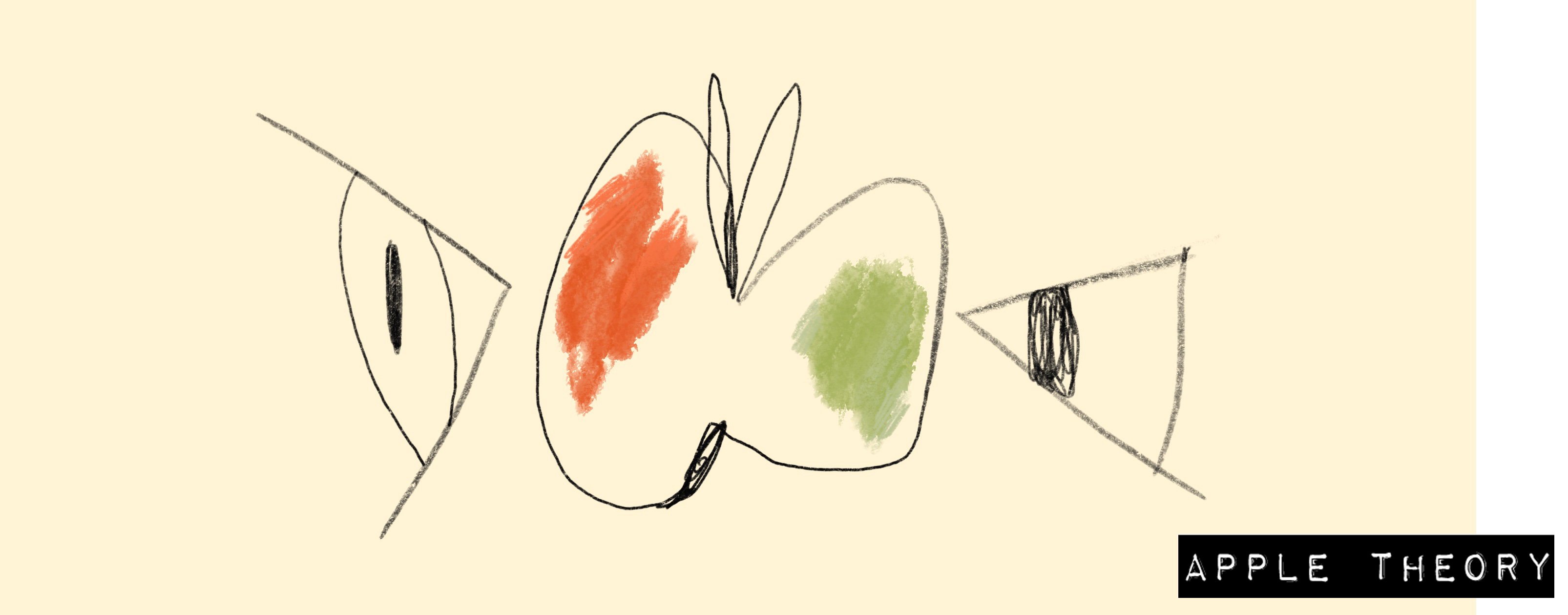
In the next section I’ll be considering just one side of the apple, from one specific perspective. Other, deeper perspectives may be equally true, but they’re not the focus here.
masters
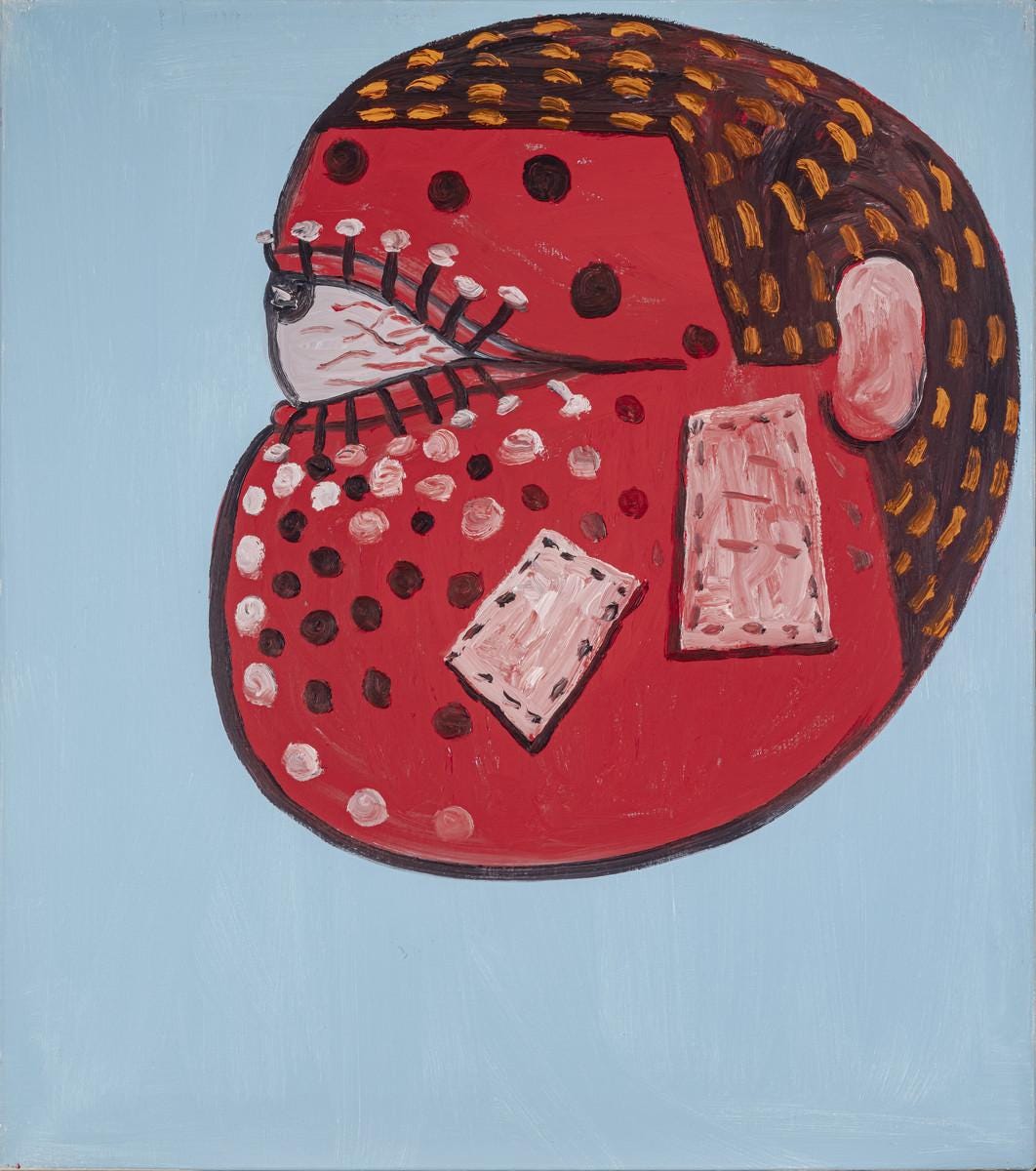
Philip Guston started as an abstract expressionist, but by the late 1960, he pivoted to showing his balls, I mean a new “playful figurative style” with absurd, grotesque, or symbolic imagery.
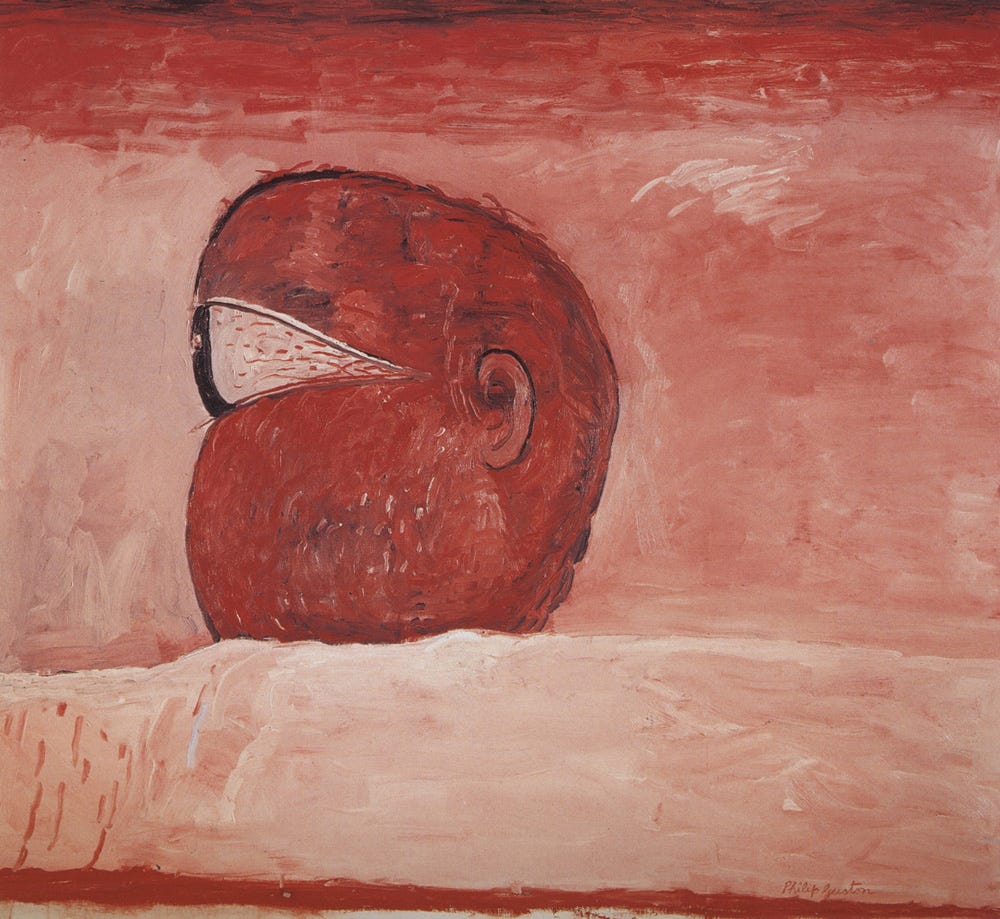
The show was reviled at first but later reappraised as groundbreaking. Hilton Kramer in The New York Times (1970) defined him as “one of those painters fated to serve a taste instead of creating one”. Two decades later, the same style was canonized as courageous, even prophetic. Guston became renowned for his socially engaged paintings.
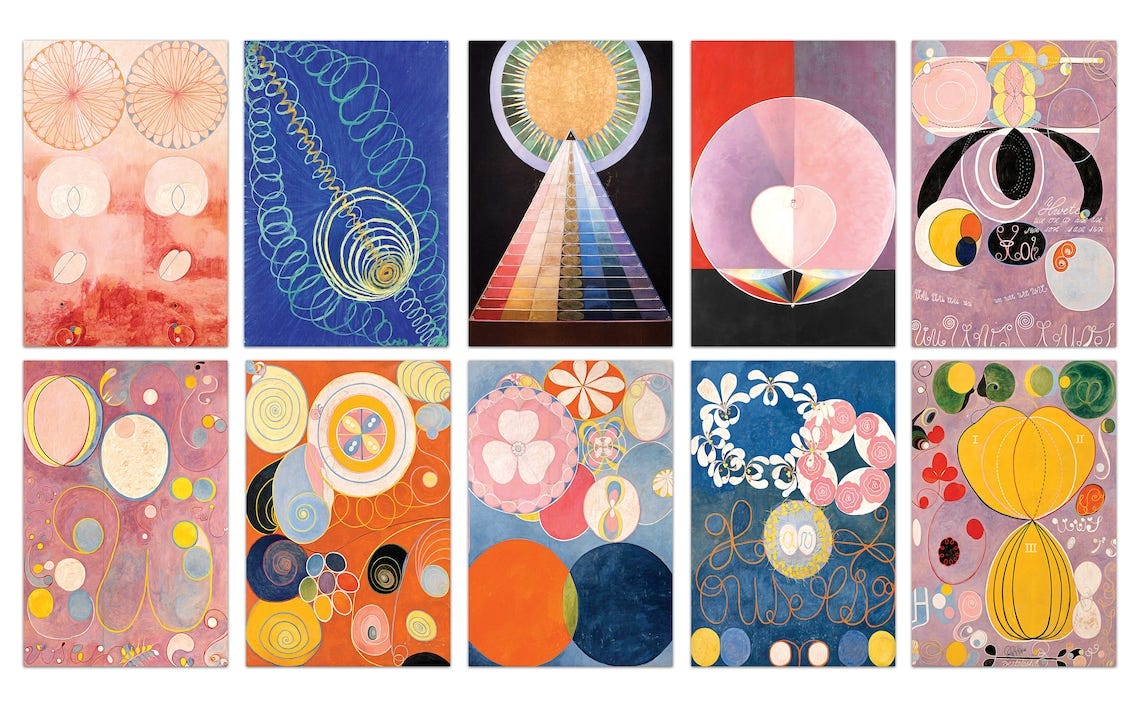
So there is no absolute definition of “good” or “bad” style. It depends on context, timing, support and privilege. Guston had the resources to survive initial ridicule. He had peers like Rothko and Pollock, New York galleries, and later institutional backing. Another artist without those resources might have been buried, and we would have no recollection of them. Privilege shapes survival. Countless women and non-Western artists were sidelined or lost to storage while their male contemporaries were canonized. Hilma af Klint painted abstraction before Kandinsky, but her work wasn’t shown publicly until forty-two years after her death. Today, she’s recognized as a pioneer.
Consider the apple. When I talk about privilege, I don’t ascribe it only to individual responsibility. It’s a reflection of the values of the time if things that shouldn’t be a privilege still are: the decency of life, time, resources, space, support, economic stability. Individuals can acknowledge their privilege, but the systems that uphold those disparities must also be held accountable.
Masters weren’t simply the greatest, but products of these very systems. Their privilege was to live in an era that privileged them. Their work was preserved and promoted not because they were the absolute best expression of the craft, but for various interdependent reasons that favored their skills, though not only their skills. Sometimes countries need propaganda, sometimes they need novelty. Sometimes style gets funded when it’s useful. The testimony we inherit isn’t always the most accurate or the most interesting. This should help inform who to archive in the future. The more we intersect different voices and perspectives, the richer and more complex our understanding of the apple becomes.
takeaway
There is no form of absolute expression or style that prevails over another. There are only styles in style at certain times, and matching them during one’s life involves luck and location. We are sold the idea that you have to find the one and only, in sickness and in health, to love and to cherish, but what sticks isn’t just what you do, but when and where you do it, and who’s watching.
So we shouldn’t ponder too much over the right or wrong style. If style is natural like handwriting, just an evolving signature, the focus shouldn’t be on how to write, but on what to say.
